
Sudden inventory fluctuations can disrupt FMCG distribution management, leading to stockouts, overstocking, and lost sales. For brands managing multi-tier networks with distributors and sub-stockists, inventory visibility at sub-stockist and distributor levels is no longer optional, it’s essential. Understanding the importance of having inventory visibility allows brands to implement inventory distribution strategies that reduce losses and improve efficiency. By leveraging tools that support omnichannel management, companies can monitor stock levels in real time, predict demand, and optimise replenishment cycles. With over 2.8% of global FMCG inventory value lost annually (Statista, 2023), having complete visibility across the network is critical to maintaining smooth operations and maximizing sales.
Table of Contents
What is inventory visibility?
Inventory Visibility refers to a business’s ability to track products from every stage. Starting from the manufacturer to the distributor and the end-point retailer. It helps brands know the stock’s availability, current location, and when it requires replenishment. Overall, it enhances your inventory optimisation for distributors.
Why is inventory visibility important?
Real-time Inventory visibility saves the FMCG brands from critical distribution situations. It helps brands avoid overstocking and stockout issues. It ensures products are available in the right place. It also reduces wastage probability as it tracks shrinkage and slow-moving stocks. With clear visibility, brands can better design their distribution strategy.
Top Inventory Visibility Challenges
Maintaining accurate inventory visibility is not always easy, especially when multiple sub-stockists and distributors are part of the supply chain. Many FMCG companies still rely on manual inventory tracking or outdated tools that lack real-time inventory visibility. This often leads to delayed updates, data mismatches, and poor decision-making across the network.
Without the right inventory visibility software or FMCG distribution management system, brands find it difficult to maintain a balance between demand and supply. To understand this better, let’s look at some of the key challenges FMCG brands face when inventory visibility is limited at the sub-stockist or distributor level.
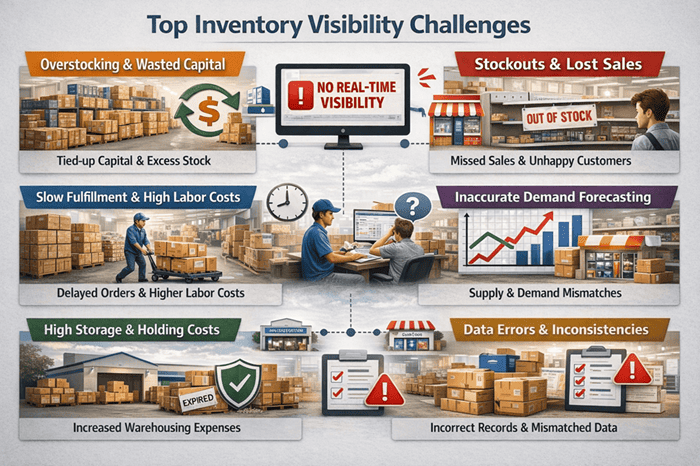
- Overstocking and Wasted Capital: Without accurate and near real-time inventory data, brands may end up overestimating the demand. It ties up the capital that could have been better used elsewhere. It also increases storage expenses for brands.
- Stockouts and Lost Sales: The presence of poor visibility causes stock shortage situations. It results in missed sales opportunities. It also damages customer trust and pushes them back towards competitors. Overall, it affects brand loyalty.
- Slow fulfillment and higher labor costs: The locating and dispatching process becomes lengthier without real-time inventory tracking for distributors. It slows down order fulfilment. It also increases labor costs, specifically for overtime work or rush orders.
- Inaccurate Demand Forecasting: Lack of visibility makes it difficult to predict future demand. It leads to shortages or overproduction. It results in reducing profitability and creating supply chain inefficiencies.
- Higher storage and holding costs: Storing excess inventory due to poor visibility raises security, insurance, and warehousing costs. It increases the risk of products being expired or outdated.
- Data Errors and Inconsistencies: Relying on manual inventory updates leads to errors. These errors cause mismatched records. It can disrupt the supply chain and reduce the business’s operational efficiency.
Key features of Inventory visibility at the sub-stockist level
Managing multiple sub-stockists within an FMCG distribution network can be complex. To maintain accuracy and control, brands need real-time inventory visibility powered by modern inventory visibility software or a sub-stockist inventory management system. Below are some of the most essential features that help improve visibility and efficiency at this level:
Efficient stock utilization
The rural sub-stockists often maintain the inventory manually. The manual data doesn’t promise accurate and real numbers of stock availability.
But the question arises here. How does real-time inventory tracking prevent stockouts and losses? Sub-stockist inventory management provides real-time visibility into inventory levels.
By implementing real-time inventory tracking software, brands gain complete visibility into every unit moving through their FMCG distribution network. It enables brands to replenish stocks as per market demand, maintain optimal stock levels, and prevent product unavailability. With advanced inventory visibility systems, companies can set up minimum order quantity levels and define stock norms for automatic PO (Purchase Order) generation. This ensures smooth inventory optimisation and better demand–supply alignment.

Helps in dealing with the 'Shrinkage' problem
The shrinkage in distribution management can be defined as the piece of inventory getting lost in the transit process. It can take place due to different reasons like theft, physical damage, or spoilage. Here, the inventory visibility from the sub-stockist’s level can help the brand to effectively track its products.
In FMCG distribution management, shrinkage refers to the loss of inventory during transit due to theft, spoilage, or physical damage. With proper inventory visibility at the sub-stockist level, brands can trace every product movement and identify where the shrinkage occurs.
Using inventory visibility solution integrated with real-time data analytics, companies can track discrepancies, prevent losses, and ensure greater accountability across their distribution chain.

Quick responsiveness to market trends
Access to real-time insights from sub-stockist-level inventory allows FMCG brands to adjust supply based on actual sales trends. It helps brands regulate their supply as per the sales volume. This data-driven visibility helps companies quickly replenish stocks for high-demand products while identifying slow-moving ones. With a 360-degree view of inventory performance, brands can create targeted trade promotions or discount schemes to clear older stocks. This kind of inventory management supports agile decision-making and strengthens the brand’s market responsiveness.
Helps to achieve sales targets
Accurate inventory visibility plays a major role in helping both distributors and sub-stockists achieve their revenue goals. Real-time insights into stock movement and sales performance enable better forecasting and prevent missed opportunities.
When brands use cloud-based DMS for FMCG or sub-stockist inventory management, they can continuously monitor sell-through rates and product performance. This helps eliminate stockout risks, support sales planning, and empower sub-stockists to meet or exceed their targets. Ultimately, strong distributor and sub-stockist inventory visibility ensures higher customer satisfaction and improved ROI. By empowering sub-stockists with real-time visibility and automated tools, brands can build stronger relationships, streamline supply chain efficiency, and drive long-term business growth.
Top Ways to Improve Inventory Visibility
Improving inventory visibility across the FMCG distribution chain requires the right blend of technology and coordination. From integrating real-time inventory tracking systems to empowering sub-stockists with mobile tools, every step enhances data accuracy and supply chain transparency.
Below are some effective ways FMCG companies can boost inventory visibility and achieve end-to-end control over their stock management.
Inbuilt Sales Force Automation (SFA)
Synchronising inventory data is important for maintaining near-real-time stock accuracy. An inbuilt Sales Force Automation integration (SFA) tool within the FMCG distribution management system allows sub-stockists and sales teams to work in sync.
When a field sales representative books orders through SFA, the data automatically reflects in the Distributor Management System (DMS). This automation minimises manual errors, ensures seamless order processing, and helps generate sales bills instantly. In short, SFA tools act as a bridge connecting on-ground sales activity with inventory visibility software, helping brands make faster, data-backed decisions.
Mobile-Based ERP Solutions
A mobile-based ERP or cloud-based DMS for FMCG brings flexibility to sub-stockists and the distributors who manage daily operations remotely. Through a single mobile app, they can handle sales, purchases, returns, and accounting all in real time.
This mobile integration keeps the inventory visibility dashboard up-to-date, allowing brands to monitor product movement, demand patterns, and stock availability anytime, anywhere. For rural and urban distribution networks, mobile ERP systems are especially valuable in improving FMCG supply chain visibility.
Collaboration with Supply Chain Partners
Real-time visibility doesn’t stop at technology; it also depends on collaboration. Working closely with suppliers, logistics partners, and distributors ensures faster stock replenishment and fewer delays. By integrating inventory visibility software across the supply chain, brands can share live data on shipment status, stock levels, and replenishment needs. This not only improves coordination but also reduces the risk of overstocking or stockouts. Collaborative visibility also supports better demand forecasting, helping brands plan production and distribution more strategically.
Use of AI and Predictive Analytics
Modern FMCG distribution management systems now integrate AI and predictive analytics to make visibility more intelligent. These tools analyse sales data, seasonal demand, and stock movement patterns to forecast replenishment needs. Predictive algorithms help brands avoid both excess inventory and shortages while cutting down on storage costs. As the market evolves, AI-driven inventory visibility software becomes essential for smarter decision-making and optimized distribution.
The Future of Inventory Visibility
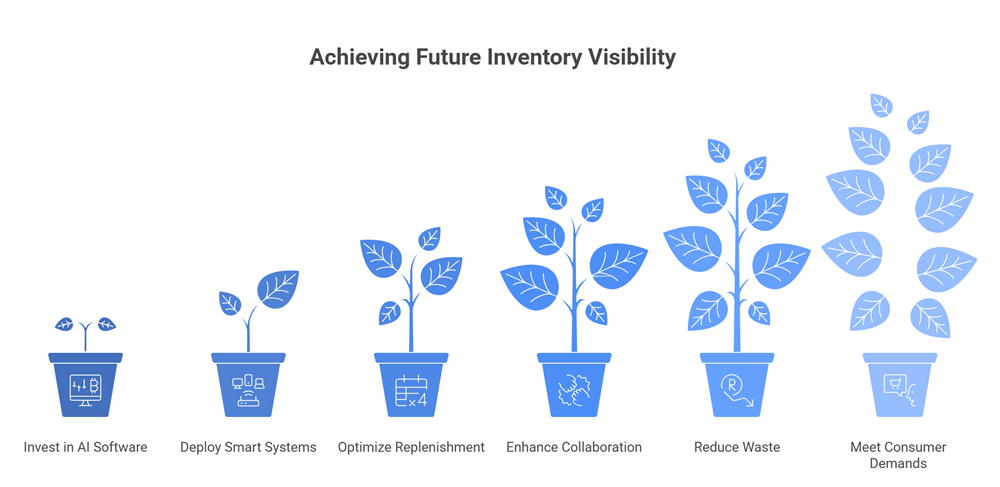
As FMCG inventory management challenges in the distribution networks grow more complex and customer expectations rise, achieving real-time inventory visibility has become essential. The future of inventory visibility lies in automation, data intelligence, and seamless connectivity across the entire supply chain.
Brands are now investing in AI-powered inventory visibility software and smart distribution systems to predict demand, track stock movement, and prevent stockouts before they happen. With predictive inventory management, companies can use data from distributors, sub-stockists, and retailers to forecast product needs and optimize replenishment cycles. Emerging technologies like Artificial Intelligence (AI), Machine Learning (ML), and IoT sensors are reshaping FMCG distribution management. These tools provide instant updates on stock location, expiry dates, and movement trends — enabling brands to take proactive decisions rather than reactive ones.
According to a report by Cyzerg, companies that focused on inventory visibility optimization observed a 2–3% rise in profit margins and a 6–8% reduction in stockouts. Moreover, with over 80% of FMCG businesses planning to adopt cloud-based DMS and digital tracking solutions, the shift toward complete supply chain digitization is accelerating. In the near future, predictive analytics, AI-driven insights, and real-time dashboards will redefine how FMCG brands manage their downstream operations. Adopting these advanced systems won’t just improve operational efficiency it will empower distributors and sub-stockists to collaborate better, reduce waste, and meet ever-changing consumer demands.
Comparison: Impact of Inventory Visibility on FMCG Distribution
Effective inventory management is critical for FMCG brands managing multi-tier distribution networks. Real-time inventory visibility allows companies to maintain balanced stock levels, reduce delays, and optimize storage costs, while the absence of visibility can lead to frequent stockouts, manual errors, and inefficient operations. The table below highlights the key differences between operating without inventory visibility and leveraging real-time inventory insights.
| Sr. No | Aspect | Without Inventory Visibility | With Real-Time Inventory Visibility |
|---|---|---|---|
|
1 |
Stock Levels |
Frequent stockouts |
Balanced stock levels |
|
2 |
Stock Updates |
Manual stock updates |
Automated real-time sync |
|
3 |
Forecasting |
Inaccurate forecasting |
Data-backed demand planning |
|
4 |
Order Fulfillment |
Delayed fulfillment |
Faster order processing |
|
5 |
Storage Costs |
Higher storage costs |
Optimized warehouse usage |
Summing Up: Inventory Visibility is an undeniable asset
Whether you manage a nationwide FMCG supply chain or operate through a regional distributor network, achieving end-to-end inventory visibility is the key to sustainable growth. Real-time access to inventory data helps brands reduce operational costs, prevent losses, and deliver consistent product availability, all of which directly impact customer satisfaction.
By adopting advanced inventory visibility software or a cloud-based Distributor Management System (DMS), companies can automate stock monitoring, track performance, and eliminate manual errors. These tools not only enable real-time stock tracking but also support smarter decision-making through data-driven insights. By leveraging modern inventory softwares like Online Distribution management system/ inventory visibility software, brands can streamline their inventory management and gain measurable profits.
Get in touch with Heera software to get top stock monitoring solutions for distributors. Discover how easy it is to achieve inventory visibility.